I looked at the studio apartment I’m moving to back in January. There were two small apartments in the building undergoing renovation. Here are some phone pics of the one I chose, before anything was done.
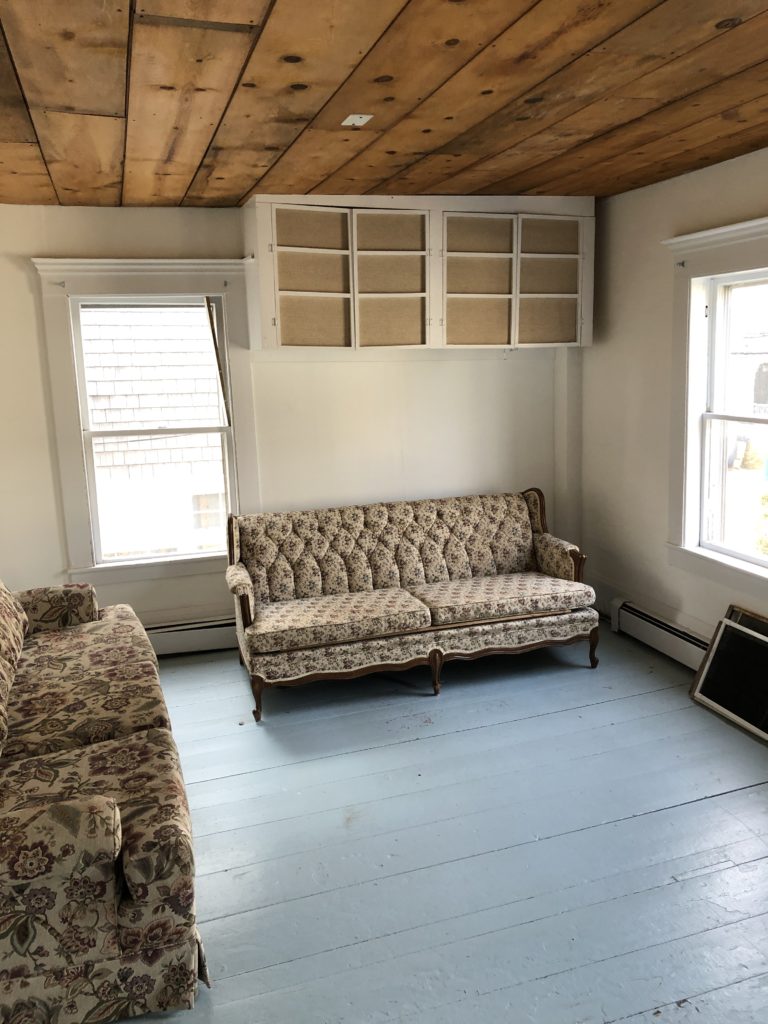
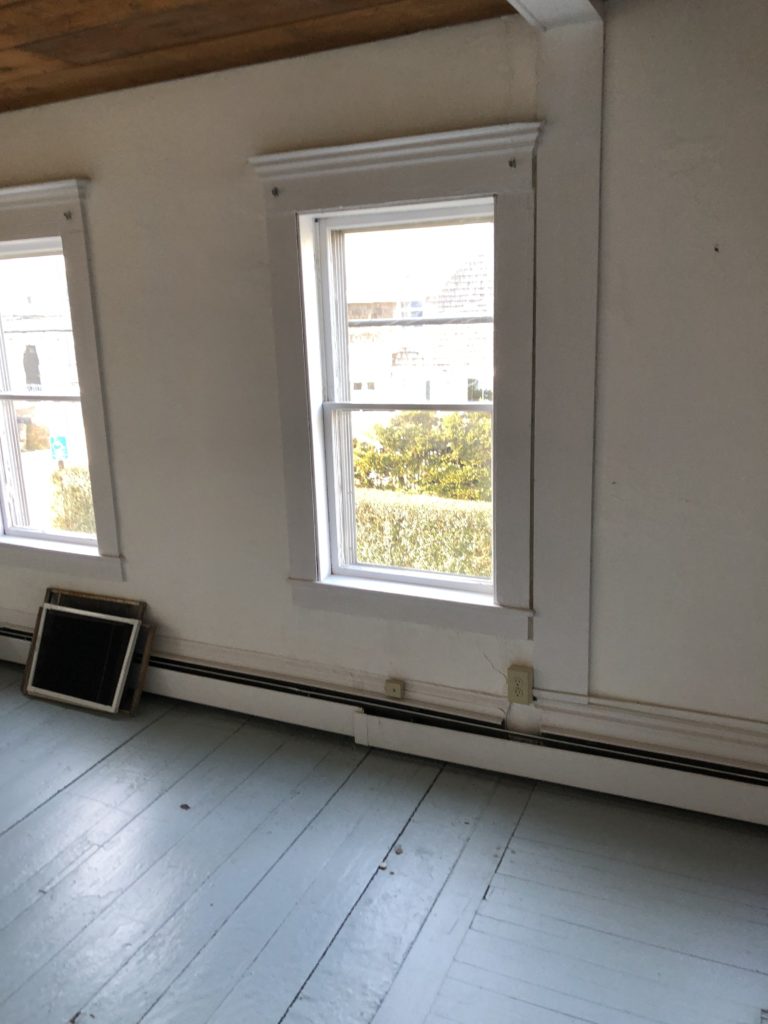
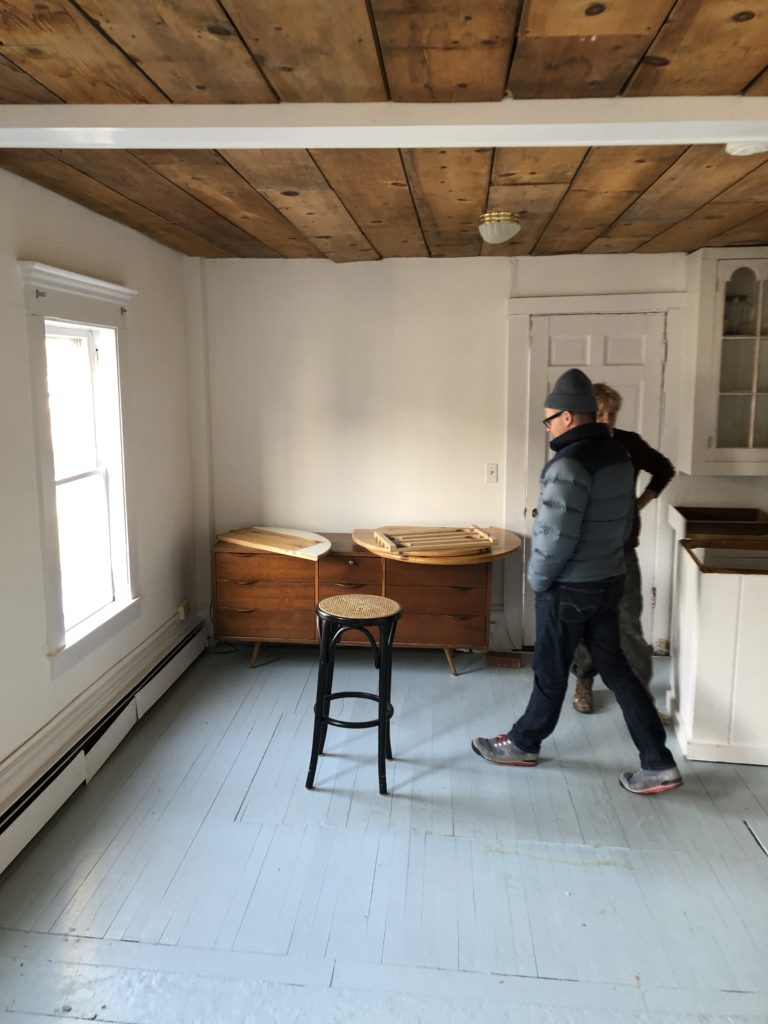
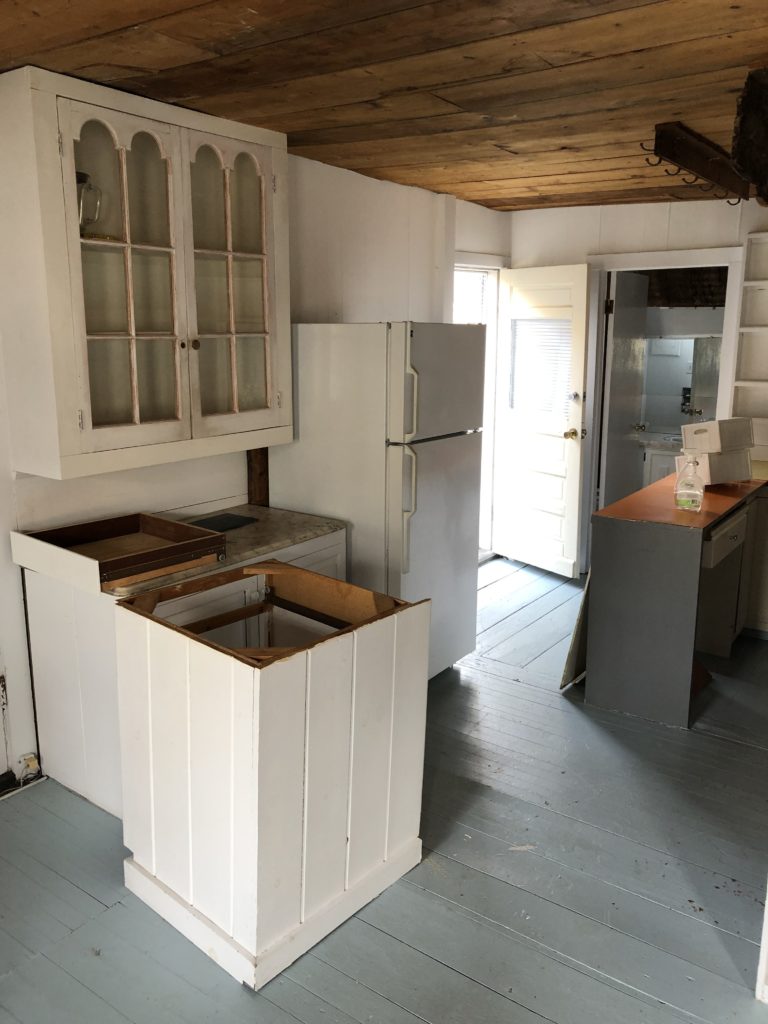
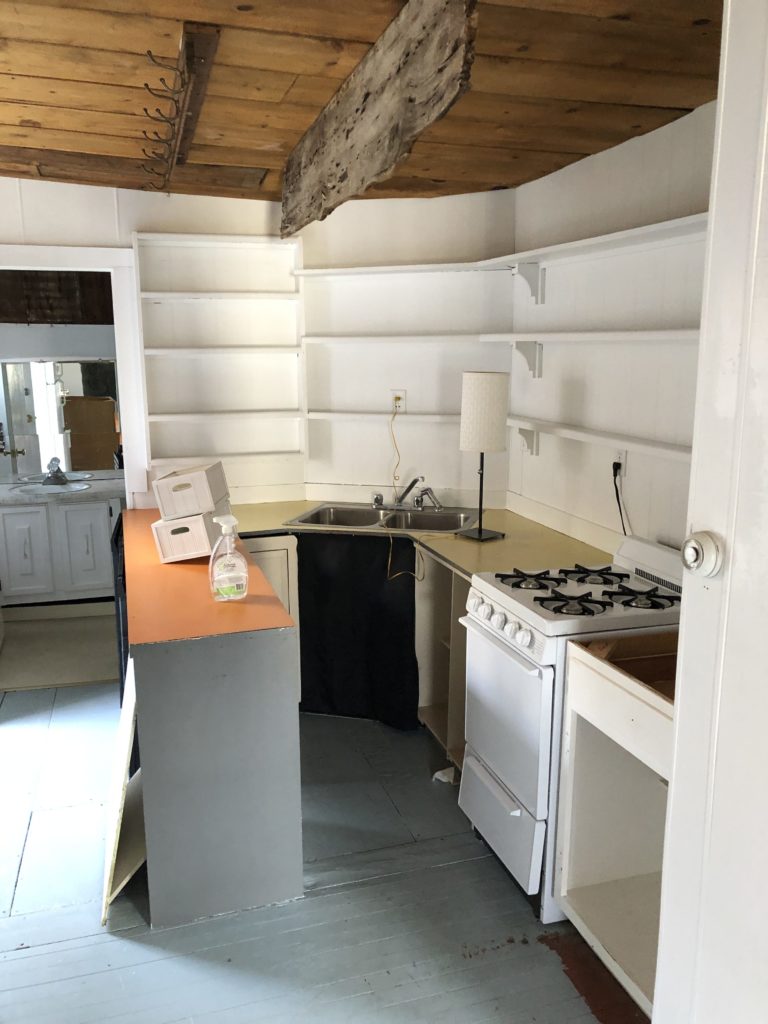
I looked at the studio apartment I’m moving to back in January. There were two small apartments in the building undergoing renovation. Here are some phone pics of the one I chose, before anything was done.
I’ve picked a hashtag and everything. Which may use a little unpacking. I’ve received good advice to treat my upcoming move to Provincetown as an adventure. And this summer I will be turning 60. So, #adventurous60.
Downsizing from what will probably be rented as a two-bedroom apartment to a small studio (I suspect it’s not more than 350 square feet, if that) is a giant challenge. High on the list of difficult things to let go of are books, in spite of doing almost all of my reading digitally these days. Case in point: The Complete Poems of Emily Dickinson, edited by Thomas H. Johnson. Purchased in 1976 in the Netherlands when I was working on a dairy farm for the summer in a Future Farmers of America program. Put in the “keep” pile because, well. Even though I haven’t touched it in years.
But no! Tonight I checked, and Dickinson’s poems are online. And so I will treasure my memories, let go of a book, and step out in adventure.
This Consciousness that is aware
Of Neighbors and the Sun
Will be the one aware of Death
And that itself alone
Is traversing the interval
Experience between
And most profound experiment
Appointed unto Men —
How adequate unto itself
Its properties shall be
Itself unto itself and none
Shall make discovery —
Adventure most unto itself
The Soul condemned to be —
Attended by a single Hound
Its own identity.

I’m likely to start blogging again to document a new adventure, and I want to see how well the current iteration of WordPress handles embedding photos from Flickr.
Oh my. Oh my goodness. Ann Leckie loved it, and I can see why. I am so very glad that there are three more on the way this year. The protagonist is a human/droid construct who calls itself Murderbot. I don’t love Murderbot quite as much as I love Breq (of Ann Leckie’s novels), but it comes very close.
The first sequel doesn’t drop until tomorrow, so today I started another of her series. (The Cloud Roads: The Books of the Raksura Book 1)
Well, for starters, of course, you can just not use it. But if it’s a useful online watering hole/neighborhood pub/back fence, here are some ideas. I’m not an expert, but some of these are actually based on experience.
I finished this a while ago, at the beginning of a recent trip and have neglected blogging about it. For some reason, I remembered The Dispossessed as a long, difficult, not particularly enjoyable read. It was not! I liked it! And there were many details I had no recollection of. With more experience and less idealism than when I first read it in my twenties, the ambiguity of the situation appealed to me this time.
It’s interesting, however, that from the distance of just a couple of weeks, I once again don’t remember many of the details. In that sense, my original response stands, that this is very much a novel of ideas for me, and much less so about character or plot.
Light is the left hand of darkness,
and darkness the right hand of light.
Two are one, life and death, lying
together like lovers in kemmer,
like hands joined together,
like the end and the way.
Ursula Le Guin’s recent death has set me on a rereading journey (and a reading journey: there’s still plenty of her work I’ve never read). I decided to start with Left Hand of Darkness, and it was fascinating to reread it. It stands up to the passage of time, and yet has not aged well. It is still a suspenseful tale, and it proposes thought experiments that are still relevant today. But the gender norms that the terran diplomat Genly Ai expresses (written in 1969 and projected into some unstated but future time) are already out of date. Conceptions not only of roles but also of gender identity have changed in major ways that make parts of the narrative distracting.
This reread made me wonder why movies and television shows are routinely rebooted or redone but books rarely are (with the exception of parodies or pastiches that combine classic books with wildly different genre tropes). I’d really love to see a progressive, visionary, feminist author retell this story today.
My perspective on the two main characters has shifted since I first read the novel. The protagonist Genly Ai so struck me previously that I’ve used the name “Genly” in several online locations when I needed a handle. On this reading, however, perhaps because I’m now middle-aged and was then more Genly Ai’s contemporary in age, I identified with Therem Harth rem ir Estraven. Estraven is the moral center: restrained, patient, mature, visionary, committed to a greater good, capable of intentional self-sacrifice. Ai is no less fascinating as a character (indeed, flaws are often the most fascinating things about characters); it’s just that I’ve gained a fuller appreciation for Estraven.
For years, I have fondly remembered a novel I read when I was a kid. It was an adult novel, not a children’s book, and it was about people who moved from a city to the country to start a goat farm. I thought the title was Star Hill, and looked off and on over the years with no success. (Bear in mind I was reading a library book of unknown age in either the late sixties or early seventies.)
Well, recently I was made aware of Internet Archive’s book program, and took another try at search algorithms—and I found it! Turns out the title is Thunder Hill, and it is by Elizabeth Nicholds, published by Doubleday in 1953. I found a copy for sale online and am having a lovely time dipping into it.
In Boston’s Symphony Hall. A nice afternoon.